
The perception that Passivhaus is an expensive luxury for eco-conscious outliers is outdated. As we approach the 2026 Future Homes Standard, the gap between standard UK building regulations and high-performance construction is narrowing rapidly. For developers, architects, and self-builders, the question is no longer whether they can afford to build to Passivhaus standard — it is whether they can afford the risk of not doing so.
At Futurehaus Consulting, we combine Passivhaus consultancy with independent quantity surveying. That dual perspective lets us read the data clearly: the "cost premium" is often the result of poor design integration, not the standard itself.
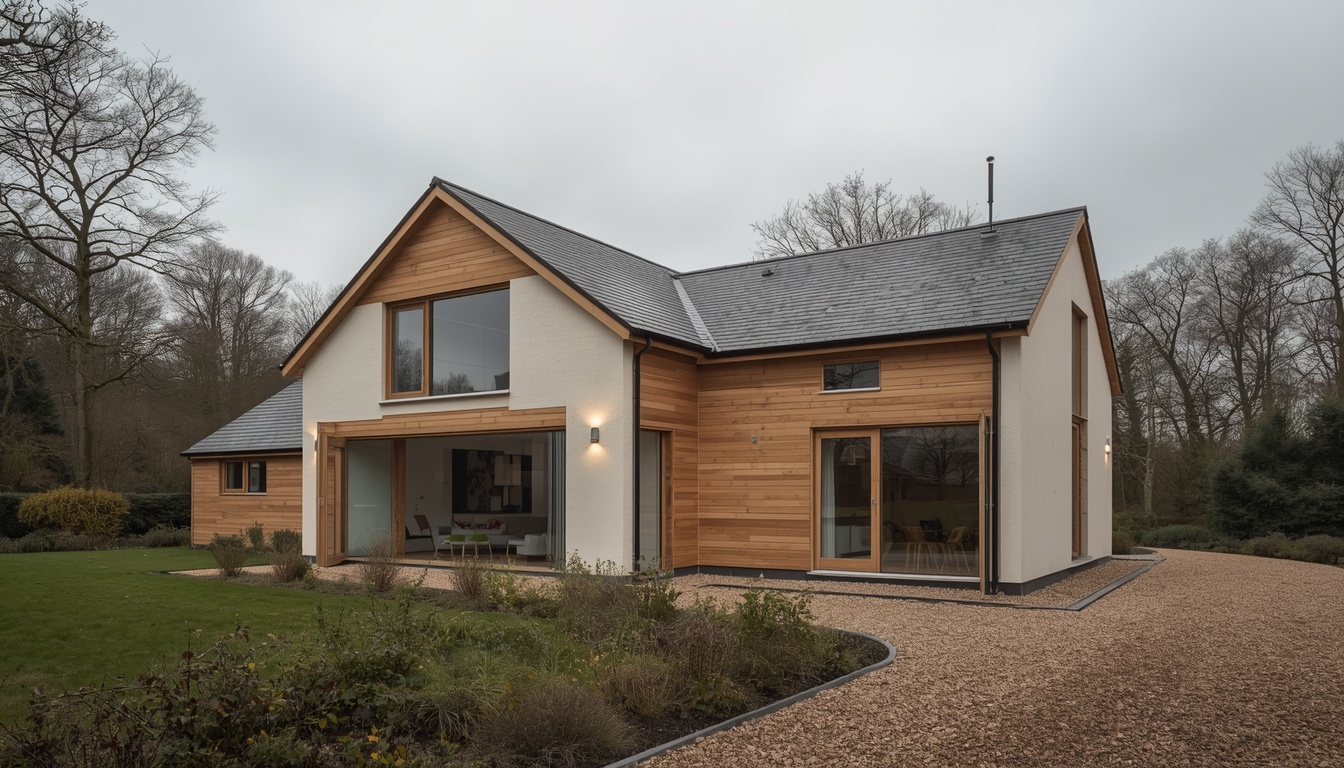
The reality of the cost premium
For years, the industry cited a 15–20% cost uplift for Passivhaus construction. That figure may have been defensible in 2010, when the supply chain was immature and the learning curve was steep. The landscape in 2025 and 2026 is fundamentally different.
According to the Passivhaus Trust, the current cost premium for best-practice Passivhaus construction in the UK typically sits between 4% and 9%. Research from Ulster University, led by Dr Shane Colclough, suggests that for certain social housing schemes the uplift has been reduced to zero through refined processes and economies of scale. An AECOM study found that the capital cost uplift for new builds can be as low as 0.9% when Passivhaus is integrated from the outset of design.
The 2026 Future Homes Standard: closing the gap
The Future Homes Standard, coming into force in late 2026, acts as a regulatory floor that pushes standard construction closer to Passivhaus levels. It mandates a 75–80% reduction in carbon emissions compared to 2013 baselines and effectively bans gas boilers in new developments.
When you compare the requirements of the FHS directly to Passivhaus, the step up is significantly smaller than it once was. Standard builders must now invest in low-carbon heating, improved airtightness, and better U-values regardless. The difference is in how the two standards achieve their goals.
Fabric-first vs bolt-on renewables
The Future Homes Standard frequently relies on bolt-on technologies — air source heat pumps, photovoltaic panels — to meet carbon targets. These have their place in a decarbonised grid, but they do not necessarily address the quality of the building envelope. Passivhaus takes a fabric-first approach: superior insulation, high-performance windows, and rigorous airtightness reduce space heating demand so significantly that the heating system itself can be downsized or simplified.
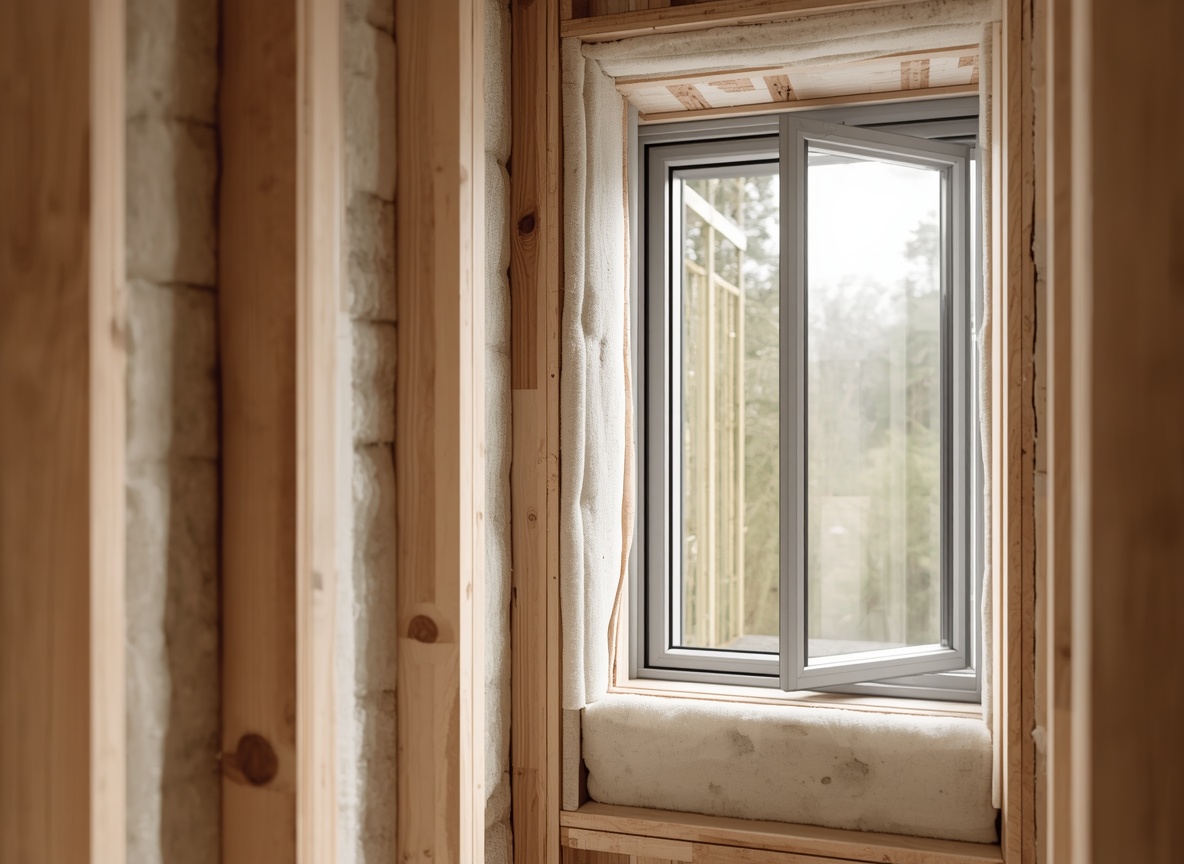
From a quantity surveying perspective, this is where the premium is mitigated. You spend more on the envelope — insulation, windows, membranes — but you spend less on complex mechanical systems and long-term energy costs. PV panels have a finite lifespan and require maintenance. A well-built building fabric performs for over 60 years with no moving parts.
Bridging the performance gap
One of the most compelling arguments for Passivhaus over standard construction is the elimination of the performance gap. NHBC Foundation research has identified that standard UK new-builds often consume significantly more energy than predicted — sometimes as much as 34% more. The causes are well documented:
- Specification uncertainty — theoretical models that don't reflect site reality
- Thermal bridging — poor detailing that leads to unmodelled heat loss
- Workmanship — airtightness failures and poorly installed insulation
Passivhaus is a quality assurance standard as much as an energy standard. The Passive House Planning Package (PHPP) provides a level of modelling accuracy that standard SAP calculations cannot match. When a project is certified, it is a guarantee — not an aspiration — that the building will perform as designed. For developers, that reduces the risk of reputational damage and post-occupancy complaints significantly.
The cost of "almost Passivhaus"
We regularly encounter projects that aim to be Passivhaus-inspired without pursuing certification. Ironically, these frequently end up more expensive. Without the rigorous discipline of PHPP and the certification process, design teams often over-specify components as a precaution. Proper Passivhaus consultancy enables value engineering in its truest sense: not by cutting quality, but by optimising the design so that every pound spent on the fabric delivers a measurable reduction in mechanical requirements. That discipline only comes with the full process.
Is it financially grounded?
When assessing financial viability, whole life cost and whole life carbon must be part of the calculation — not an afterthought. Passivhaus delivers on both:
- Lower operational costs — with space heating demand reduced by up to 90%, occupants are substantially protected from energy price volatility
- Increased asset value — growing evidence points to high-performance buildings commanding a green premium in both resale and rental markets
- Future-proofing — the Future Homes Standard is the regulatory minimum; Passivhaus ensures the asset remains high-performing well into the future without expensive retrofits
The bottom line
A 4–9% premium for a building that is guaranteed to perform, provides exceptional comfort, and is future-proofed against rising energy costs and tightening regulation is, on any reasonable assessment, not a luxury. It is a commercially sound decision.
At Futurehaus Consulting and James Brown Projects, we don't treat Passivhaus as an add-on. We integrate cost management with performance modelling from day one of design — ensuring that the building is not only energy-efficient, but commercially viable and buildable.
If you are planning a development or a self-build, the question is no longer about the cost of the premium. It is about the value of the performance.
References
- Passivhaus Trust (2024/2025): Passivhaus Cost Research & Position Papers
- NHBC Foundation: The Performance Gap in UK Housing
- Ulster University, Dr Shane Colclough: Cost Optimal UK Deployment of the Passive House Standard
- AECOM: The Cost of Net Zero
Note: actual cost premiums vary based on project scale, site constraints, and early-stage design integration.